India faces an unprecedented water security challenge. With 18% of the world’s population but only 4% of its freshwater resources, industrial water stress is no longer a future concern, it’s today’s business reality. The message is clear: adapt your water management strategy or face operational disruption.
In today’s climate reality, where water insecurity has become a tangible business risk, industrial sectors must rethink how they use and reuse this finite resource. Climate volatility, increasing urban and industrial demand, and regulatory pressures are placing enormous stress on freshwater systems. In response, Zero Liquid Discharge (ZLD) is emerging as a powerful solution not just for environmental compliance, but also for strategic advantage.
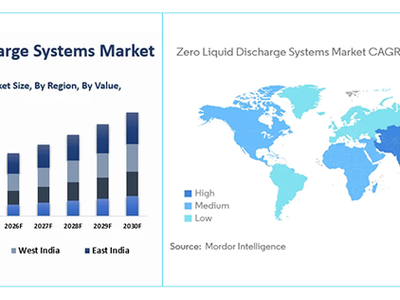
India’s ZLD market is exploding- from USD 7.80 billion in 2024 to USD 11.48 billion by 2029 (8.0% CAGR). (Source: MarketsandMarkets Research Report).
This growth is being driven by increasing water scarcity, rising industrial water demand, regulatory mandates and ESG-linked investment pressures.
Several industries including textiles, chemicals, power generation, and pharmaceuticals are leading this shift. In water-stressed states like Tamil Nadu and Gujarat, the Central and State Pollution Control Boards have already mandated ZLD in many water-intensive clusters. Further, rising adoption of Corporate Environmental Responsibility (CER) and sustainability-linked finance is motivating companies to go beyond compliance and build future-proof effluent treatment strategies.
Source: TechSci Research
ZLD systems close the loop by ensuring that no liquid waste leaves the facility. These effluent treatment systems typically combine pre-treatment, filtration, reverse osmosis, evaporation, and crystallization to recover up to 95% of water for internal reuse. What remains is solid waste, salts or sludge, which can be safely disposed of or repurposed.
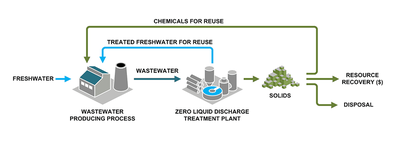
For industries operating under stricter CETP regulations and discharge limitations, ZLD ensures not only compliance but continuity. Industrial effluent is now being reconsidered as a reusable resource.
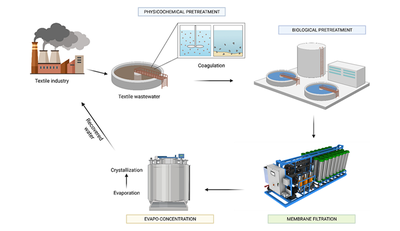
Modern hybrid ZLD systems combine multiple technologies i.e. membrane filtration, evaporation and crystallization. This isn’t just about treating water; it’s about water circularity that recovers valuable by-products like salts and minerals while integrating renewable energy sources.
While ZLD technologies offer enormous value, they are only as good as their monitoring systems. A malfunctioning pump, membrane fouling, incorrect chemical dosing, or unnoticed TDS imbalance can quickly compromise compliance and operations.
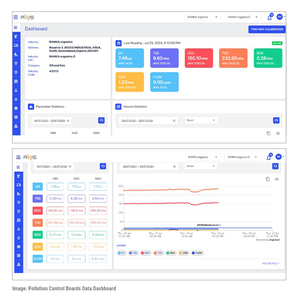
Real-time monitoring ensures precision and reliability. Online analyzers for pH, BOD, COD, conductivity, turbidity, chlorine, flow rate and more can now feed data into Industrial IoT (IIoT) platforms.
IoT-enabled monitoring doesn’t just track your system, it predicts problems before they happen, optimizes performance automatically, and provides the digital transformation your operation needs to stay competitive.
Continuous monitoring of ZLD systems helps identify any issues early on, preventing more significant problems from occurring. When equipped with the right sensors and analytics, a ZLD system becomes more than a treatment plant, it becomes an adaptive, intelligent water management ecosystem.
The Smart monitoring systems seamlessly integrate with your existing operations. Cloud-based dashboards, SCADA integration and mobile alerts ensure your team has actionable insights whether they’re on-site or remote.
pH & Conductivity: Real-time chemical balance monitoring prevents membrane damage
COD/BOD Levels: Ensures consistent treatment efficiency and regulatory compliance
Flow Rates & TDS: Optimizes water recovery and identifies system anomalies early
Membrane Performance: Predictive analytics prevent costly unplanned maintenance
Let’s talk numbers. ZLD systems, especially those equipped with analyzers and automation, come with a significant upfront cost. For small and medium enterprises, this can feel like a hurdle.
CPCB regulations are tightening, and ESG compliance is becoming non- negotiable for industrial lending and investment. Companies with robust real-time monitoring systems don’t just meet today’s requirements, they’re prepared for tomorrow’s standards. ZLD with real-time monitoring speaks directly to corporate responsibility.
Compliance Advantage:
Real-time monitoring systems provide automated reporting, timestamped data, and predictive alerts that keep you ahead of regulatory inspections and audits.
In an era of increasing water scarcity and regulatory pressure, the question is no longer “Can we afford to monitor in real time?” but “Can we afford not to?”. Companies investing in real-time water management today are building the foundation for sustainable, profitable operations tomorrow.
At Axis Solutions Limited, we don’t just provide monitoring systems, we deliver complete water intelligence solutions and systems. Our IoT-enabled sensors and analyzers, cloud-based dashboards, and CPCB- compliant OCEMS frameworks give you the insights and control you need to turn water challenges into competitive advantages.
With secure and encrypted communication, we ensure that your operational data stays protected because at Axis, your privacy is our priority.
Connect with our Water Management Experts
WhatsApp Support for Immediate Assistance







 Axis Login